
Protein Weight Recharge®

HIGH PROTEIN · LOW CARB · GOOD SOURCE OF FIBRE
Hit your 35.
Real food. Real protein.Nothing to guess.
Protein isn't just about the number of grams. The amino acids within that protein matter too. One serve of PWR BALLS® delivers around 35 g of protein, including 2.6 g of leucine and approximately 5 g of BCAAs — a complete protein in real savoury food.
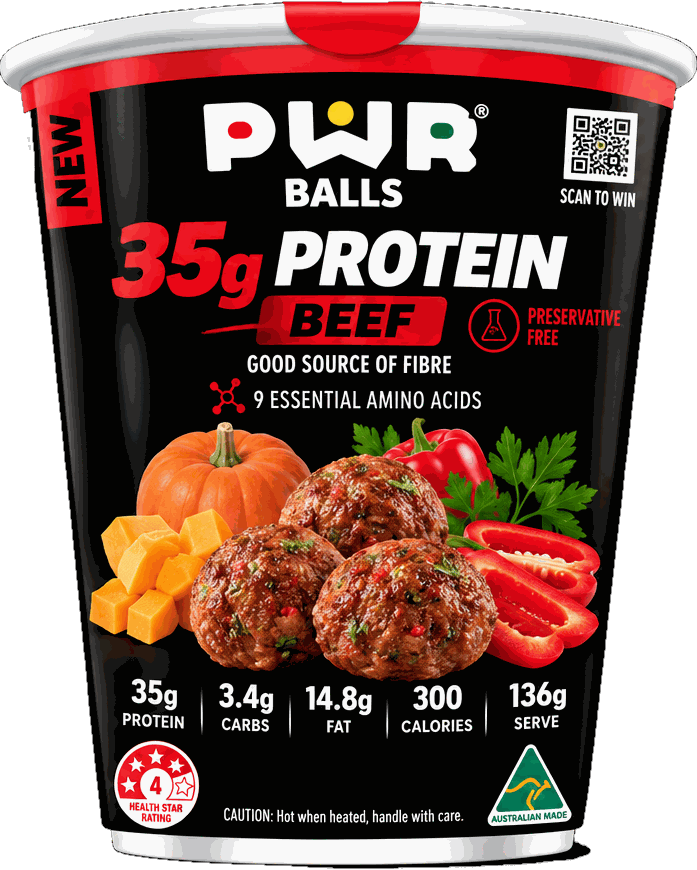
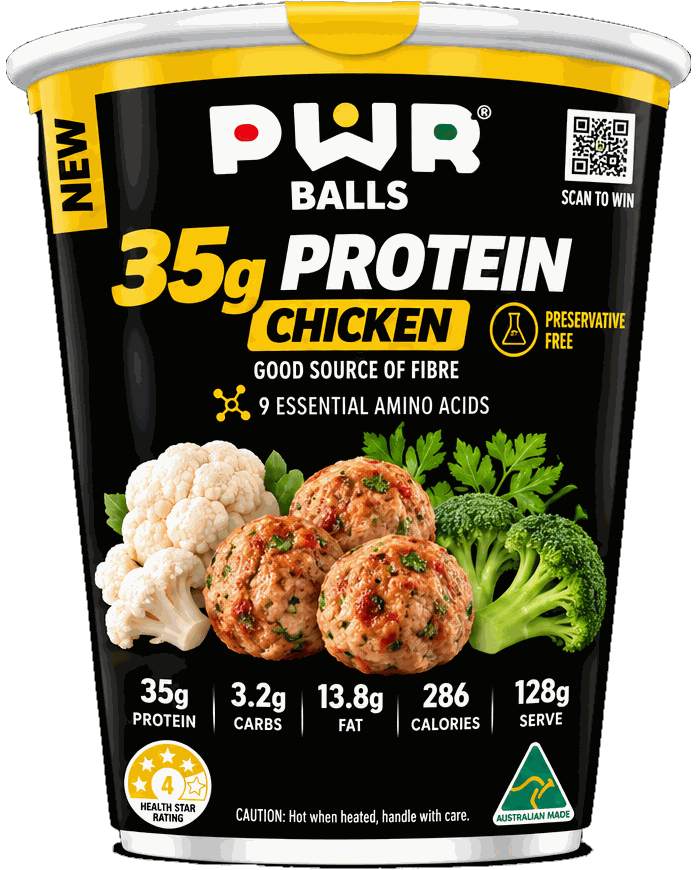
Single-serve microwave cups
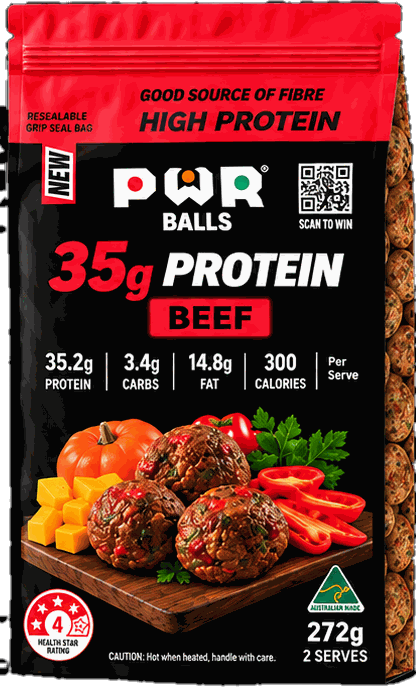
Twin serve bag2 serves
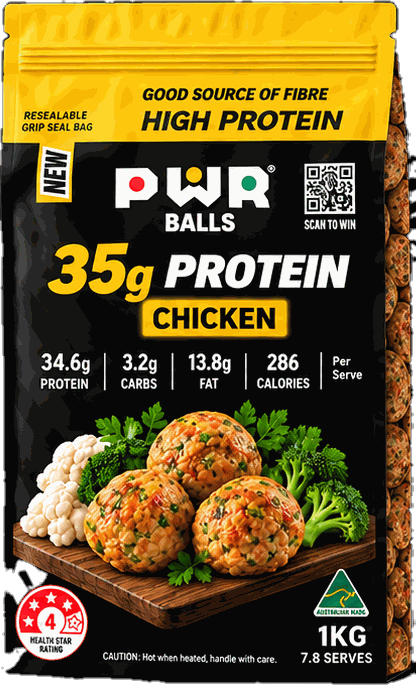
1 kg bulk pack7.7 serves
PWR BALLS®
Know what you need.Know what fits.
The free PWR BALLS® tracker calculates your daily nutrition targets, tracks what you’ve eaten and shows you exactly how many PWR BALLS® close your gap.
See your macro gap. See how PWR BALLS® fit.
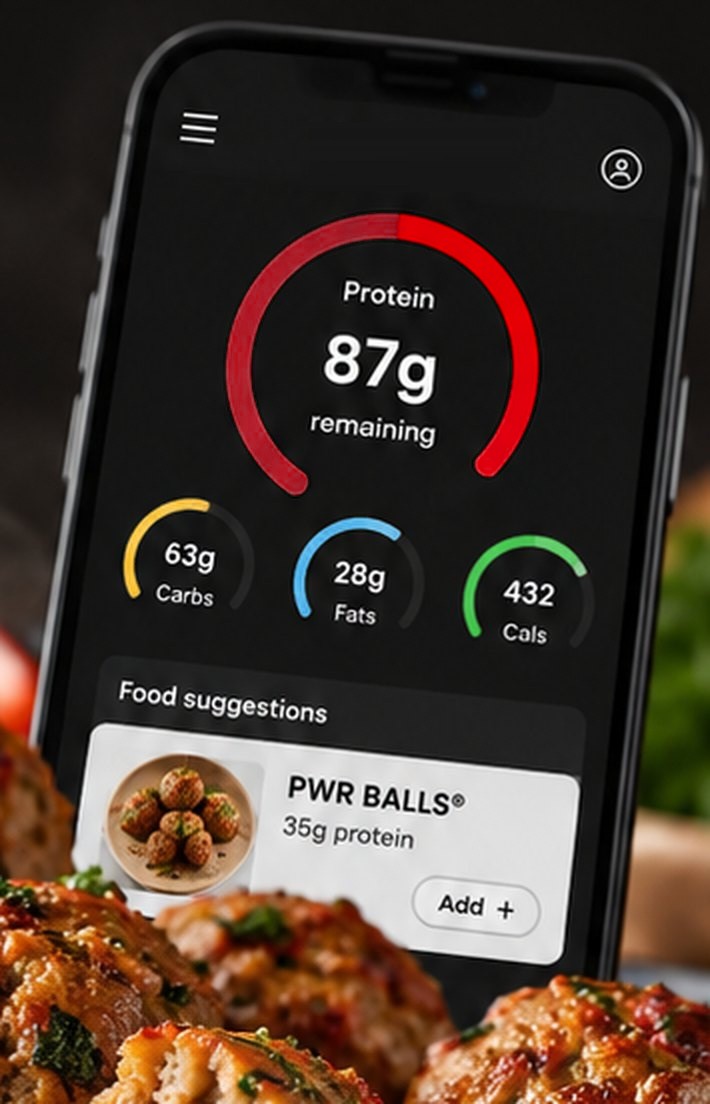
Free in your browser. No app store, no card.
deliver a unique balance of high protein, low carb, a good source of fibre, no preservatives, all nine essential amino acids and over 2.5 g of leucine a serve — all for 300 calories or fewer a serve.

Now that’s really powerful.
The PWR BALLS® difference
Enjoy sports-nutrition numbers in a real savoury snack or meal.
Not a protein bar. Not a shake. Not a yoghurt. Not another carb-heavy ready meal.
Plenty of foods are high in protein. What matters is what comes with it. One serve — 8 balls — carries about 35 g of protein, 5.7–6.2 g of dietary fibre and 3.3–3.4 g of carbohydrate, for 291–300 calories. That combination is hard to find in a conventional high-protein meal or snack.
The protein base is real food — meat, dairy, egg and whole-food vegetables. It is complete protein: a complementary blend of animal and plant sources carrying all nine essential amino acids, with selected protein concentrates and a faba bean isolate added to finish the profile and lift the leucine share. Food first, with the gaps filled deliberately — not a protein built from isolates and flavoured afterwards.
Measured, not estimated
Protein powders have long made amino acids part of the conversation. We think real food should be just as transparent. Independent laboratory analysis of the finished recipes measured about 2.6 g of leucine and about 5 g of BCAAs in a serve — alongside 5.7–6.2 g of dietary fibre and 3.3–3.4 g of carbohydrate, in a compact savoury food. So the figure on the front is backed by what the protein is made of, not only how much of it there is.
See the lab results →Why not all protein is the same, gram for gram — the research →
Why this much protein?
So one serve is a complete meal’s worth, rather than a top-up you have to build a meal around.
Why the fibre?
Because a protein-first diet is exactly where fibre quietly disappears — most high-protein foods bring none at all.
Why so few carbs?
So you decide where the carbohydrate in your meal comes from, instead of it arriving with the protein.
Why measure the amino acids?
Because grams of protein do not tell you the whole story, and we wanted to know what is in ours. The results are published.
Build every meal around meaningful protein.
Around 25–30 g of high-quality protein per meal provides a practical target for supporting muscle protein synthesis. Individual requirements vary according to age, body size, activity level, training and protein quality.
high-quality protein per meal — a practical target for a strong response
leucine per meal — the target zone the protein needs to carry
dietary fibre per serve — a good source, which high-protein food rarely is
Hear it from the researchers
Don't take our word for it. These are full interviews with the scientists and clinicians whose work the 30 g threshold rests on — watch or listen to the evidence yourself.
The scientists and clinicians on why protein quantity, quality and timing decide what your body does with a meal.
Watch on YouTube ↗Interviews on muscle protein synthesis and the 2.5 g leucine threshold that a PWR Balls® serve is built to clear.
Watch on YouTube ↗Not all protein is created equal
Protein claims are on every second pack now, so a number on its own no longer separates anything. We scaled 18 foods to the same 35 g of protein — one serve — and measured what it took each of them to get there.
foods clear both bars — 2.5 g leucine and 4 g fibre
what one serve of PWR BALLS® costs you to get there
what the next food that clears both costs you
No row wins everything — chickpeas carry far more fibre, chicken breast reaches the protein in less weight. But closing leucine, fibre and energy at once otherwise takes more than one food.
Two heroes, three sizes. All clear the bar.
The same balls, the same 8 of them to a serve — 130–136 g depending on the flavour — in whichever size fits the week. Beef and chicken, 6 packs in all.
Single-serve cups
One serve, heated in the cup. The lunch you did not plan.
2 packs · chicken and beef
Twin serve bags
Two serves in a bag — dinner, or dinner and tomorrow.
2 packs · chicken and beef
1 kg bulk packs
Seven and a half serves. The week, bought once.
2 packs · chicken and beef
Every serve across the range is PWR BALLS® to the same specification — the pack size changes, the serve does not.
Independently tested, and published
Every figure on this site comes from accredited laboratory analysis of the actual recipe — not from a supplier specification and not from a recipe calculation. The whole panel is published, per serve and per 100 g, along with the laboratories, the certificate numbers and the methods.
Nutrition analysed by Symbio Laboratories Melbourne, NATA accreditation no. 2455, accredited for compliance with ISO/IEC 17025 — Testing. Certificate M2318372-B [R01], issued 15 September 2026 (samples Beef 30310726 and Chicken 020626, received frozen at −8 °C on 8 September 2026). Every analyte above was determined in-house and within the accredited scope — none is marked on the certificate as subcontracted or outside scope. Gluten by Symbio M2318372-A, method CF040 (ELISA), not detected at a limit of reporting of 3 mg/kg. Amino acids were subcontracted to the National Measurement Institute.
Leucine is measured directly by accredited laboratory amino acid analysis.
The app that does the maths.
- Personal calorie & macro targets from your stats and goal
- Food diary with search, favourites, recipes and barcode scan
- Macro Gap Solver — exactly how many PWR Balls®close today's protein gap
- Water, steps, weight trend and streaks — one dashboard
Works on any phone — add it to your home screen for a full-screen app, no app store needed. No sign-up — your data stays on your device until you create an account.
Put it on your phone — about twenty seconds
It installs to your home screen from the browser and opens full screen, with no browser bars and no app store. iPhone, Android, Samsung Internet and desktop are all covered, including the security warning Samsung shows and what to do about it.
Show me the steps for my phone →